
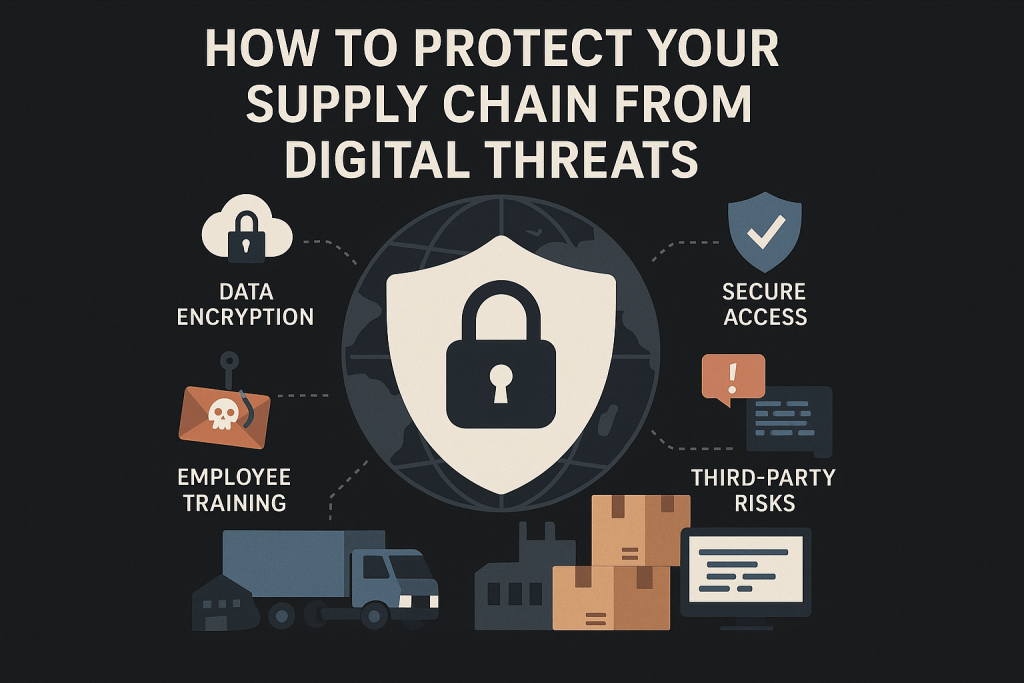
In today’s fast-paced world, supply chains are more connected than ever before. From logistics software to warehouse systems and payment platforms, nearly every step of the chain relies on digital technology. While this brings efficiency and speed, it also opens the door to cyber risks. A single digital breach can disrupt shipments, expose sensitive data, and damage trust between partners.
Protecting your supply chain from digital threats is no longer optional — it’s essential. In this article, we’ll break down what supply chain cyber risks are, why they’re growing, and how businesses can shield themselves from these dangers in practical, human-friendly steps.
Why Supply Chain Security Matters
A supply chain is only as strong as its weakest link. Think of it like a series of connected roads: if one road collapses, the whole route is blocked. In the same way, if one partner in your chain is hacked — whether it’s a shipping company, software vendor, or cloud service — your entire operation may be at risk.
For example:
- A cyber-attack on a logistics provider could delay shipments for days or weeks.
- A ransomware attack on your warehouse management system could lock you out of your own inventory.
- A phishing email could trick an employee into giving access to critical systems.
The cost of such disruptions is enormous. Beyond financial loss, businesses risk damaged reputations, lost customers, and strained partner relationships.
Common Digital Threats in Supply Chains
Before we dive into solutions, let’s understand the key threats:
Ransomware Attacks
Hackers encrypt your systems and demand payment to unlock them. For supply chains, this could mean paralyzed shipping systems or inaccessible inventory data.
Phishing and Social Engineering
Employees may be tricked into clicking malicious links or revealing login credentials. Once hackers gain access, they can move through systems quietly.
Third-Party Vulnerabilities
If your supplier or vendor has weak cybersecurity, hackers can use them as a backdoor into your system. This is often the biggest risk in modern supply chains.
Data Breaches
Sensitive information like client data, shipment routes, or financial details can be stolen and sold on the dark web.
Distributed Denial of Service (DDoS) Attacks
Hackers overwhelm your digital infrastructure with traffic, shutting down websites or portals your business relies on.
How to Protect Your Supply Chain from Digital Threats
Now that we understand the risks, here are practical steps to strengthen your defenses:
1. Know Your Supply Chain Inside-Out
Map out every digital connection in your supply chain. This includes logistics providers, payment systems, cloud platforms, and even smaller vendors. Once you have a clear map, you can identify weak spots where security may be lacking.
Tip: Ask every vendor about their cybersecurity practices. If they can’t answer, that’s a red flag.
2. Strengthen Access Controls
Not everyone needs access to everything. Limit system access to only what’s necessary for each role. Use multi-factor authentication (MFA) to ensure even if passwords are stolen, hackers can’t easily break in.
Human example: Think of it like a warehouse — not every employee should have keys to the entire building. Restricting access limits the damage if something goes wrong.
3. Regular Security Audits
Conduct routine checks of your systems and your partners’ systems. Look for outdated software, weak passwords, or unpatched vulnerabilities.
Pro tip: Outsource to a cybersecurity firm for penetration testing — they simulate attacks to find weak spots before real hackers do.
4. Secure Your Data
Encrypt sensitive data both “at rest” (when stored) and “in transit” (when sent). This way, even if hackers steal information, it’s unreadable without the encryption keys.
Also, back up data regularly. Keep backups offline or in a separate secure cloud so you can recover quickly in case of a ransomware attack.
5. Employee Awareness Training
People are often the weakest link. Train employees to spot phishing emails, avoid suspicious downloads, and follow security protocols.
Simple habit: Encourage staff to always double-check sender addresses and never share passwords over email or messaging apps.
Final Thoughts
Protecting your supply chain from digital threats isn’t a one-time job — it’s an ongoing process. By knowing your risks, securing data, managing partners, and preparing for incidents, you build resilience against attacks.
In a world where cybercrime is growing daily, strong supply chain security gives your business a competitive edge. It ensures reliability, protects trust, and keeps operations running smoothly — no matter what digital threats come your way.
At the end of the day, a secure supply chain is not just about technology. It’s about protecting relationships, keeping promises, and building a future where businesses and customers can trade with confidence.